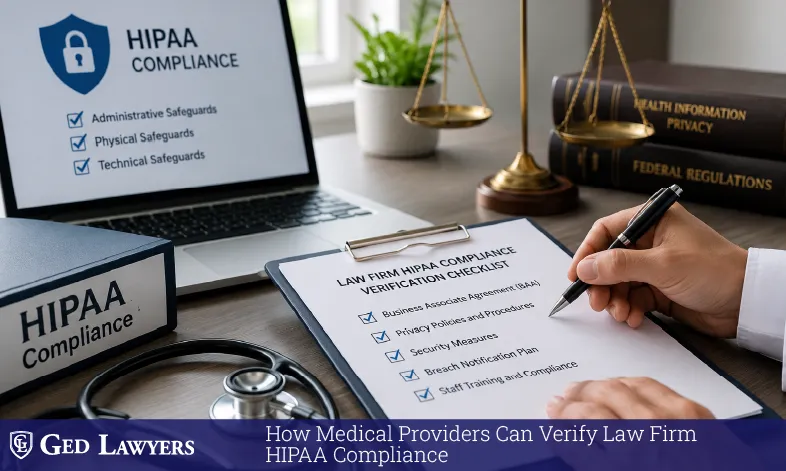
Medical providers often hire law companies to help them get back lost revenue, settle PIP disputes, handle insurance cases, and do work related to compliance. This is when protected health information about patients, like medical notes, billing files, and more, is shared.
After giving this information, you are still responsible for it. You are still in charge of how that information is treated under HIPAA. You could lose your privacy, get fined, or have your reputation hurt if your law firm doesn’t defend it.
You need to know how law firms handle information about their clients. It’s important that they have clear checks on their work. Making sure they follow HIPAA rules protects your business and your customers.
Why HIPAA Compliance Matters When Working with Law Firms
These are the clear rules that HIPAA gives for how to store, view, and share information about patients. When they help with legal or billing work, law companies often get private information.
This information may include:
- Patient medical records
- Billing and coding data
- Treatment documentation
- Insurance claim files
Patient data may be shared for valid legal reasons, but HIPAA rules still apply. You are still responsible for how that data is handled. This includes any third party, such as a law firm. They must keep patient information protected at all times.
When Medical Providers Share PHI With Law Firms
There are several common scenarios where providers need to share PHI with legal partners. These situations are often tied to financial recovery or regulatory processes.
For example, providers may share patient information during:
- PIP claim disputes
- Insurance litigation
- Medical billing recovery efforts
- Compliance investigations
- Responses to subpoenas or legal requests
Patient data is exchanged, examined, or moved in each of these circumstances. Because of this, data security is crucial at each stage of the legal process.
Key HIPAA Requirements Law Firms Should Follow
Secure Handling of Protected Health Information
Patient data must always be protected by law firms that collaborate with healthcare providers. They should limit access to only the appropriate individuals, employ encryption, and use secure storage solutions. By taking these actions, the danger of data exposure is decreased.
Controlled Access to Medical Records
Not everyone in a law firm needs access to medical records. Only those working on a case should be allowed to view this data. Clear access rules help make sure patient information is used only when needed and for valid reasons.
Secure Communication Channels
Patient data needs safe methods when it is shared. Law firms should use secure and encrypted ways to send this information.
This may include:
- Encrypted email platforms
- Secure client portals
- Protected document sharing systems
Data breaches during transfers are less likely when safe communication techniques are used.
Staff Training on HIPAA Requirements
The individuals managing the data also have an impact on compliance. Employees who handle medical records should be aware of HIPAA regulations, privacy requirements, and appropriate data handling. Frequent training lowers errors and protects patient information.
Risks of Working with Non-Compliant Legal Partners
Medical providers may face significant issues if they work with a law firm that violates HIPAA regulations.
These dangers could consist of:
- Unauthorized patient data sharing
- Fines and penalties
- Violations of patient privacy
- Loss of trust and reputation
Responsibility can still fall on the provider, even if the mistake comes from the law firm. This makes early checks very important.
How Medical Providers Can Evaluate Law Firm HIPAA Compliance
You should review a law firm’s data protection steps before sharing any patient information. The process can stay simple but should cover key areas.
Reviewing Data Security Practices
Check how the firm stores and protects data. Look at the systems they use and how information is managed. Secure storage and proper handling should be in place.
Confirming Secure Communication Methods
Ask how patient data is shared. Secure and encrypted communication should be part of their daily process.
Understanding Access Controls
You need to know who can view patient data. Access should be limited and based on roles within the firm.
Verifying Confidentiality Policies
Check if the firm has clear privacy rules. These should cover how patient data is handled and protected at all times.
The Importance of Clear Data Handling Agreements
You should also set clear terms before sharing any patient data. These agreements help both sides stay aligned.
They should include:
- Privacy expectations
- Data protection rules
- Allowed use of patient data
- Data storage and removal steps
Written agreements create clarity and keep both parties responsible for how data is handled.
How Secure Legal Partnerships Support Revenue Recovery
Law firms help providers recover payments in many cases.
This may include:
- PIP disputes
- Insurance claim recovery
- Payment related legal cases
- Collection of unpaid claims
These tasks need close coordination and access to billing and medical records. When a law firm follows HIPAA rules, you can move forward with recovery efforts and keep patient data safe.
Best Practices for Protecting PHI During Legal Collaboration
Even if you work with a law firm that follows the rules, you still need to do more to keep patient information safe.
Best practices include:
- Sharing only the minimum necessary PHI required for the case
- Using secure file transfer systems for all communications
- Maintaining audit trails of shared documents
- Periodically reviewing the law firm’s data handling practices
These steps add an extra layer of protection and help reduce risk throughout the legal process.
Final Thoughts
Law firms are often hired by medical providers to handle complicated payment problems and insurance disputes. Sharing private patient data is a part of these relationships, which is why they are important.
You need to make sure that law firms follow the HIPAA rules. This helps guard the information about your patients and keeps your business safe. It’s very important to check your legal partners, make clear rules about data, and follow safe dealing steps.
Choosing the right law company is more than just getting results. Trust, data security, and the right way to handle medical data are important at every step.