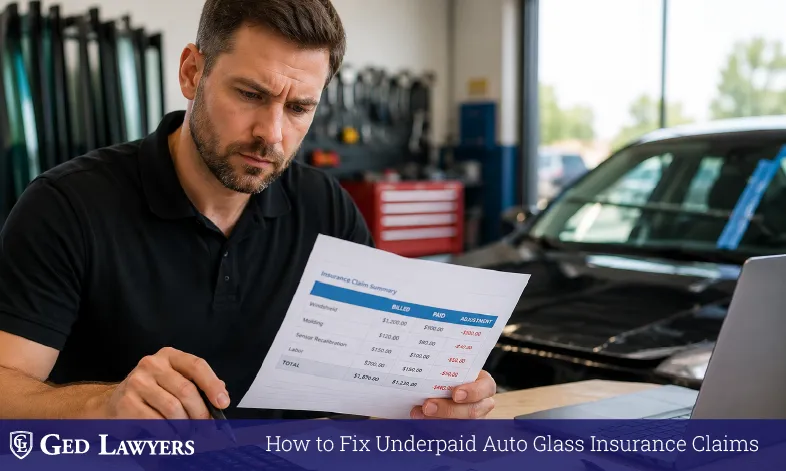
Auto glass installers are insurance-backed for any accidental damage and other unforeseeable circumstances. As assumed by many installers that if the claims are forwarded, the payment will be reimbursed. Ignoring the fact that PIP underpayment and rejections are too common to ignore. Still, if ignored at the start, it can become an extensive portion of your payment.
Despite the demanding work of glass installers, the PIP revenue leakage can cost you a fortune. Without proper oversight, underpayments can reduce profit margins and create cash flow inconsistencies.
Identification of these financial gaps and enforcing a structured claim review approach can keep the auto insurance reimbursements transparent.
Why Insurance Payout Challenges Are Common in Auto Glass Services
Insurance payout issues in auto glass businesses are often a result of operational realities:
- High volume of claims processed daily
- Jobs tied to accident-related coverage and third-party insurers
- Pricing structures that vary by insurer guidelines
- Different documentation requirements across claims
- Fast-paced work that leaves little time for detailed payment verification
These factors can lead to inconsistent payouts, unnoticed underpayments, and operational pressure that strains your team.
Common Reasons Auto Glass Claims Are Underpaid
Understanding why underpayments happen is the first step toward fixing them.
Incorrect Pricing or Fee Schedule Application
Insurers sometimes apply pricing benchmarks that differ from what you expect. Reimbursements may not align with agreed-upon or standard rates, reducing overall revenue.
Missing or Incomplete Documentation
Incomplete or missing details can directly affect payment amounts. Even minor documentation gaps can result in lower reimbursement, despite services being valid and completed.
Insurer Adjustments and Reductions
Payments may include unexplained deductions. Adjustments are often applied inconsistently across similar jobs, creating confusion and reducing revenue.
Lack of Claim-Level Review
Many businesses accept payments without verifying line-item accuracy. These small dues can accumulate over time and directly impact the profits.
How Underpayments Impact Your Business
The effects of underpayments are gradual but significant:
- Revenue loss builds across multiple claims
- Profit margins shrink without visibility into discrepancies
- Cash flow becomes unpredictable
- Business decisions are harder without accurate financial data
- Administrative workload increases when issues surface later
Without a proactive claims review, your business may be leaving money on the table with every job processed.
The Most Effective Way to Increase Insurance Payouts
You can start by looking into the paid claims but do not ignore the denied claims. Compare what you billed with what you received and highlight any unpaid balance. Do not focus on individual differences, pay attention to patterns in how auto insurers apply reductions or adjustments.
Setting up the process to catch underpayments early can make a significant difference. The vigilant process of claim review will significantly decrease the PIP underpayments.
What a Structured Claim Review Process Looks Like
A structured approach ensures accuracy and financial clarity:
- Systematic comparison of invoices and insurer payments
- Validation against pricing guidelines and reimbursement rules
- Identification of missed or reduced line items
- Tracking payer-specific trends over time
- Ensuring documentation supports full reimbursement
- Organized reporting for better visibility
This process transforms claim management from reactive to proactive, giving your business more control over finance.
Key Benefits of Improving Claim Oversight
Higher Reimbursement Accuracy
Detailed reviews ensure payments align with billed services and agreed-upon rates.
Faster Payment Resolution
Early identification of discrepancies allows for quicker correction and increased recovery.
Reduced Revenue Leakage
Ongoing monitoring prevents repeated underpayments, protecting long-term revenue.
Better Financial Visibility
Clear insights into payouts allow smarter decision-making and operational planning.
Signs Your Auto Glass Business Is Losing Revenue
Consider these indicators:
- Payments vary for similar jobs
- Frequent unexplained adjustments
- Difficulty reconciling invoices with payouts
- High claim volume but inconsistent revenue
- No structured review process for completed claims
If you notice these patterns, your business may be underpaid more than you realize.
How to Strengthen Your Internal Billing Process
Improving billing oversight can prevent future revenue loss:
- Review insurance payments regularly at a detailed level
- Maintain complete and accurate job documentation
- Track insurer-specific payout patterns
- Implement periodic claim audits
- Train staff to identify discrepancies early
These steps ensure your team proactively identifies and addresses underpayments.
The Role of Revenue Cycle Management in Auto Glass Claims
Revenue Cycle Management (RCM) is the backbone of claim accuracy and financial performance:
- Supports accurate claim submission and tracking
- Identifies underpayments and facilitates corrections
- Aligns documentation with insurer requirements
- Provides visibility into reimbursement trends
- Helps maintain consistent financial outcomes
RCM transforms your revenue process from reactive to strategic, reducing errors, and improving long-term profitability.
Final Thoughts
Auto glass businesses frequently experience hidden underpayments in insurance claims. Small discrepancies across multiple jobs can quietly erode revenue and create cash flow issues.
By reviewing paid claims and implementing a structured oversight process, businesses can improve payout accuracy, reduce revenue leakage, and gain better visibility into financial performance.
Stronger claim oversight empowers auto glass companies to maintain consistent cash flow, protect profit margins, and make more informed business decisions.